
Collaboration Is More Than Cooperation
Collaboration, when it actually happens, is magical.
It’s a symphony where everyone brings their unique gifts to the table, is able to flex and adapt to those around them as they move toward a shared outcome. It’s harmonious. It’s balanced. It’s…rare.
It’s rare because while the idea is easy enough to grasp, there are a number of unseen factors that need to fall into place for it to work. It’s significantly more complex than most people tend to consider, or than software companies might have you believe. Tools can enable more effective communication, but even that requires conversations that extend far beyond the tool itself.
Collaboration in the Pressure Points framework looks at how people genuinely work together. That includes the trust, the communication, the sense of belonging, the ability to disagree and move forward anyway. All of which carry far more significance than how a team uses Slack or Teams.
When collaboration is happening, it’s almost invisible. When it breaks down, the damage shows up everywhere.
✉️ Get the Infinite Impact
Join thousands getting weekly wisdom on unlocking hidden potential, building meta-abilities, and creating meaningful change through practical frameworks you can use immediately.
The Heart of the Operation
The Collaboration pressure points framework maps to the heart because its unseen factor is connection. When Collaboration breaks down, we need to apply the kind of pressure that creates more connection.
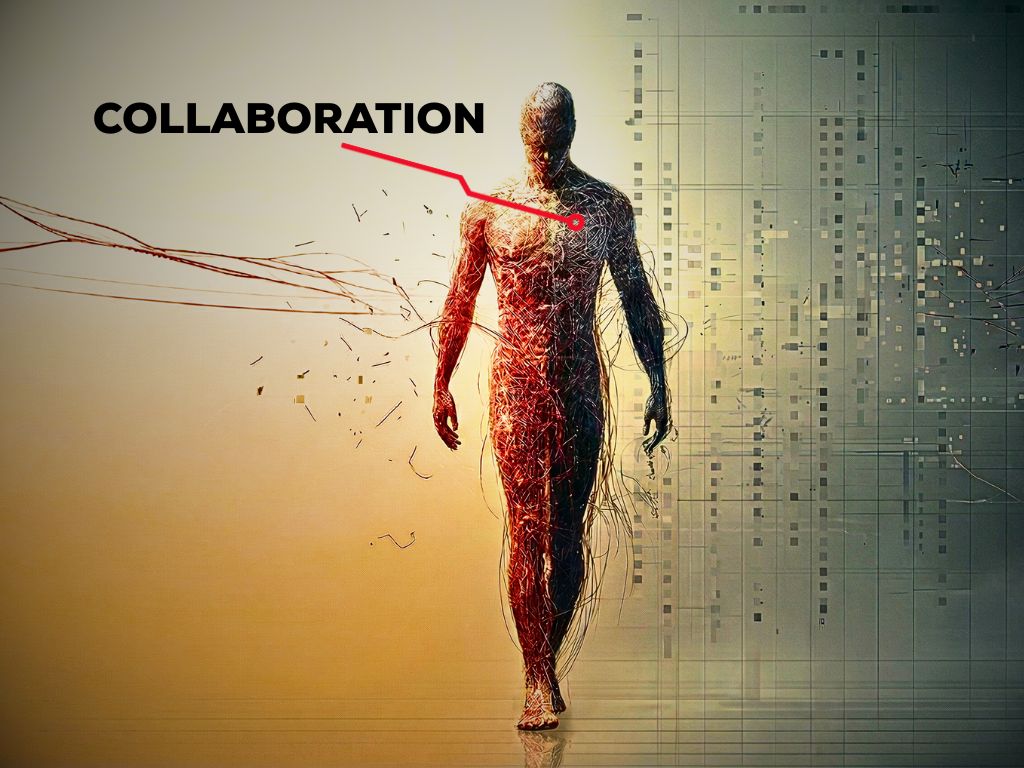
Connection is the mechanism that determines whether a team is a collaboration or just a collection of individuals.
Regardless of whether everyone is working hard or moving in the same direction, if connection is missing things slowly fall apart. It’s the factor that determines whether people share information or hoard it. It helps us understand why they cover for each other versus why they protect their own turf. It’s the critical factor that explains whether you will ever hear people say “I don’t know” or “sorry, that was my fault.”
If you want ownership, accountability, adaptability, and resilience, you need more connection. That’s the most reliable path to collaboration.
The Connection to Belonging
When things aren’t working, one of the first types of pressure organizations try to apply, is control. Control is one of the fastest ways to break down connection. It’s the sort of pressure that causes people to be scared, defensive, and rigid.
People collaborate most fully when they feel safe to do so. They need to trust that speaking up won’t get them punished. They need to know that asking for help won’t signal incompetence and put their livelihood at risk. They have to feel that their perspective is genuinely wanted in the room.
All of that is describing a space where people feel that they belong. At Super Productive, our experience has shown that belonging is not the result of good collaboration, it’s a prerequisite factor.
People from marginalized groups can readily attest that the most common and unacknowledged obstacle to belonging is the enforcement of default expectations. This is the pressure for everyone to conform to an implied “right way” to communicate, to work, or to look and dress. This is the background radiation for many work cultures, where a subtle form of control masquerades itself as “professionalism.” It’s the culprit behind a long history of excluding divergent thinking from the room.
Genuine collaboration happens in spaces of belonging where the full range of how people connect is fair game.
What Collaboration Is Actually Solving
When we map Collaboration to the six organizational pains, the pattern is consistent.
Speed
Handoffs between teams can break down when they don’t understand each other’s workflows or constraints. Information might get hoarded when no one knows who is responsible for what. Decisions can get dragged into full consensus when there isn’t enough trust in the smaller group.
Consistency
Teams operating in silos might develop their own norms that quietly diverge from everyone else’s. Feedback loops go absent or informal, so inconsistencies go uncorrected. When knowledge sharing isn’t the embraced, institutional memory walks out when people leave. Good collaboration means moving away from over-reliance on a single person or team.
Output
When teams don’t know what each other is working on, they might waste time solving the same problems twice. Collaborative projects stall when dependencies aren’t communicated or honored. And output suffers when people waste energy managing egos and office politics instead of trusting one another and focusing on the work.
Innovation
Psychological safety is a foundational aspect of innovation. When people don’t feel safe to propose bold or unconventional ideas, they don’t propose them. This limits a team’s access to cognitive diversity, which comes from people’s different backgrounds, thinking styles, and ways of approaching a problem. This is one of the most underutilized innovation assets most teams have—and lose—when connection, belonging, and collaboration fall apart.
Prioritization
When teams aren’t aligned on shared goals, they optimize for their own lane at the expense of the whole. Leadership compounds this by sending conflicting signals –– different voices championing different priorities with no clear resolution. Without a regular cadence for cross-team alignment, everyone is prioritizing in the dark. That is far from the spirit of collaboration.
Burnout
People burn out faster when they feel alone. When no one has their back, when managers don’t understand their working style or energy patterns, when the culture of “always on” goes unchallenged because no one models anything different. Recognition matters more than most leaders realize. Collaboration helps stop burnout before it happens.
Collaboration Is a Leadership Responsibility
Collaboration requires effort from everyone involved and rarely does it self-organizes. Usually, someone is driving it.
This requires leaders who see building a collaborative culture as an everyday commitment rather than an event or outing. We need leaders who value different viewpoints, who demand accountability at all levels of the organization, and who invest in their team members as much as they do the shareholders.
Trust falls and ping pong tables aren’t enough to make people feel safe or create a space of belonging. Almost no one becomes more willing to collaborate because of a once-a-year outing, but they might when even a single colleague shows that they genuinely care about them.
We can apply the Collaboration pressure point by helping everyone feel safer, learning to be more understanding of one another, and figuring out their ideal role on the team.
What Comes Next
Over the next two posts, I’ll be diving into Utilization and Systems –– two pressure points that tend to get more attention in productivity conversations, but are often treated as the whole picture when they’re really part of a larger one.
Before that: take a look at how your team actually communicates, day to day, when things get complicated. That’s where the real Collaboration picture lives.
For a structured way to start mapping your organization’s Collaboration gaps to the root causes driving them, you can learn more and take the diagnostic at getsuperproductive.com/pressure-points.
I hope you enjoyed this post!
If you liked this post, then you will LOVE my newsletter (The Infinite Impact)
and my learning community (The Superhero Institute).
⚡️ Join for free or upgrade to get even more

✉️ Get the Infinite Impact
Join thousands getting weekly wisdom on unlocking hidden potential, building meta-abilities, and creating meaningful change through practical frameworks you can use immediately.
