
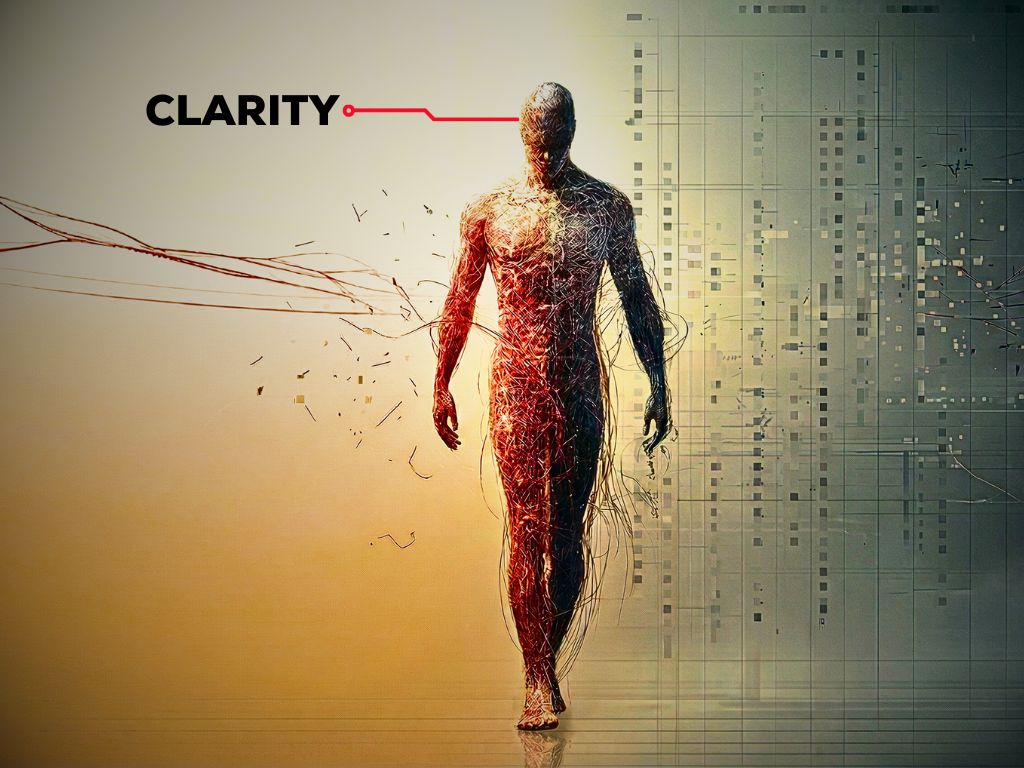
Clarity Is More Than Communication
There are four pressure points and among them, Clarity is the one that tends to be the most misunderstood.
People hear the word and often immediately think it’s all about communication. But while Communication is often one of the mechanisms, Clarity is the outcome — the result of what was communicated and how each person interpreted it.
Regardless of what was communicated, what people actually know and believe about the plan and their role in it, is the true measure of Clarity.
When Clarity breaks down, symptoms show up everywhere. Clarity plays a part in how fast the team moves, how consistent the work is, and whether people feel any real sense of purpose at the end of the day.
It is, in the simplest terms, a prerequisite for almost everything else that makes a team function. So, let’s spend today clarifying some things.
✉️ Get the Infinite Impact
Join thousands getting weekly wisdom on unlocking hidden potential, building meta-abilities, and creating meaningful change through practical frameworks you can use immediately.
The Head of the Operation
The Clarity pressure point maps to the head because we’re talking about applying pressure to a team’s understanding and how it manages cognitive diversity.

Clarity is what people are actually thinking, not just what they’ve been told. You can hold a kickoff meeting, send a follow-up email, and post the goals in a shared doc, and still have a team full of people who are various stages of confused.
They may be guessing about what matters most, or who owns what, or how far they’re allowed to push before they need to check in.
All of that guessing comes at a cost and shows up in places most leaders don’t initially connect back to an issue of Clarity.
Clarity Is a Two-Way Flow
When we work with leaders, individuals, and teams, we’re looking for a concept to click. This one is among the most important: Clarity isn’t something that gets broadcast for an individual or team to receive. The responsibility for Clarity doesn’t fall squarely on the receiver. For Clarity to actually happen, it must be a collaboration. It has to be a two-way flow of information.
One of the often-invisible reasons this insight is so important is that different brains process information differently. When teams fail to consider this fact, they should not be surprised when people seem to be marching in different directions.
The Myth of Normal
Regardless of whether a person has a formal diagnosis, the reality of neurodiversity is that every person has a brain that is totally unique to them. The way they process stimuli, understand instructions, and the experiences that have shaped them, all contribute to a one-of-a-kind wiring.
- Some people are highly literal and need explicit instructions, clear definitions, and nothing left to assumption.
- Others operate on context and implication, assuming the unspoken is understood.
- Some make sense of things visually, through diagrams, frameworks, or written structure.
- Others need a conversation to fully absorb what’s being asked of them.
- Some thrive when given detailed direction.
- Others need room to experiment and discover their own path to the outcome.
None of these are wrong — they’re just different. Neurodivergent team members in particular often bring processing differences that change what a “clear” message might feel like to someone else.
What this means for Clarity
It’s not enough to assume that you can deliver a message once, in one format, to one assumed standard of understanding, and expect that to get the job done.
Real Clarity requires taking ownership that the message landed. That means understanding each other enough that you can adapt to the other person, and vice versa.
When your team seems lost, it might just be that they were speaking a different language all along.
That cognitive reality is why Clarity problems are so hard to spot — and why they quietly drive so many of the issues organizations struggle with most.
What Clarity Is Actually Solving
When we mapped Clarity to the six organizational pains, we found that it, more than any of the others, shows up as a root factor in nearly all of them.
Speed
When priorities are unclear, teams slow down. When no one knows who has the authority to make the call, important decisions stall. When ownership was never really established, work gets done twice, or waits indefinitely.
The team might look slow, but it’s possible they’re just confused. And it doesn’t stop there.
Consistency
When there’s no documented standard for what “good” looks like, quality becomes subjective — and unless your team is fully aligned, subjective means inconsistent.
When how something should be done only exists in someone’s head, onboarding new team members becomes subject to whoever is available, or a massive burden for the few with the critical knowledge.
A team cannot be consistent when everything depends heavily on who produced it and when they joined the team.
Output
The gap between what leadership says the strategy is and what people actually work on every day is a classic Clarity gap. Perhaps even more common is when leaders hold a certain expectation of output but lack critical information about what’s actually blocking output from those doing the work.
Busy teams with low output are frequently a Clarity problem disguised as a performance problem. The same is true when it comes to how teams decide what to work on.
Prioritization
When “priority” means something different to every team, it’s hard to get people aligned on what’s most important. More commonly, when everything is a priority, then nothing winds up being a priority. Predictably, what fills the priority vacuum is urgency.
While priority is typically a decision deeply rooted in purpose and mission, urgency is often a function of reactions, anxiety, and crisis. Each person filters decisions through their own lens, and the most important work often gets overlooked.
Innovation
When there’s no clear vision of where the team is headed, it’s challenging to know what a “good idea” might look like. When people have no sense of their team’s risk tolerance or openness to ideas, innovation takes a backseat to job security and playing it safe.
This is the sort of Clarity few organizations talk about out loud. Instead, assumptions are made and the environment eventually becomes the sort where it feels pointless or risky to try.
Burnout
While burnout is often framed as a workload problem, a significant portion of the burnout we’ve seen in organizations is happening to people who don’t know what “enough” looks like. They never feel finished because finished was never clearly defined.
They absorb responsibilities that were never theirs because no one mapped the roles clearly enough. They push harder and harder without any visible connection between the effort and an outcome that actually matters to them.
Without Clarity, they burn out.
Clarity Is a Leadership Responsibility
Teams that have Clarity are the result of people taking the time to answer hard questions out loud and taking accountability for ensuring everyone got the message. Because Clarity doesn’t just happen. Someone has to create it…and if you’ve read my book, it should be no surprise that I lay this at the feet of leaders.
Leaders often know the answers to the important questions, but not enough take the time to make sure everyone on the team does.
Leaders often know what they want everyone working on, but sometimes the insights they need for that work to get done actually come from those on the team doing the work.
Clarity is a solvable problem, but it requires understanding how to apply pressure in the right places.
What Comes Next
Over the next three posts in this series, I’ll be doing the same deep dive for Collaboration, Utilization, and Systems.
In the meantime, sit with this one.
Consider what would happen if you asked someone from your team:
“What are your top three priorities for this quarter, and what’s your role in achieving them?”
How confident are you that their answer would match yours?
And just for funsies, try this one for yourself:
How confident are you that you know how each member of your team communicates most effectively, what their strengths and weaknesses are, how they relate to time, and overall how their brains process the world?
These are some of the questions we work with teams to have definitive, confident answers to. It’s why we created the User Guide Sessions to help team members create their operating instructions to share with the team. It’s why we developed the entire Pressure Points program.
If you need a structured way to start mapping your organization’s Clarity gaps to the root causes driving them, you should learn more and take the diagnostic at getsuperproductive.com/pressure-points.
I hope you enjoyed this post!
If you liked this post, then you will LOVE my newsletter (The Infinite Impact)
and my learning community (The Superhero Institute).
⚡️ Join for free or upgrade to get even more

✉️ Get the Infinite Impact
Join thousands getting weekly wisdom on unlocking hidden potential, building meta-abilities, and creating meaningful change through practical frameworks you can use immediately.
